















The Daily Choices That Help Protect Your Brain for Life
The Daily Choices That Help Protect Your Brain for Life
Details
Written by Michelle Davies
Published: 18 July 2026
Created: 18 July 2026
Last Updated: 18 July 2026
Most people think dementia arrives suddenly in old age.
I don’t.
After nearly three decades of placing my hands on people’s heads, I’ve come to recognise a pattern.
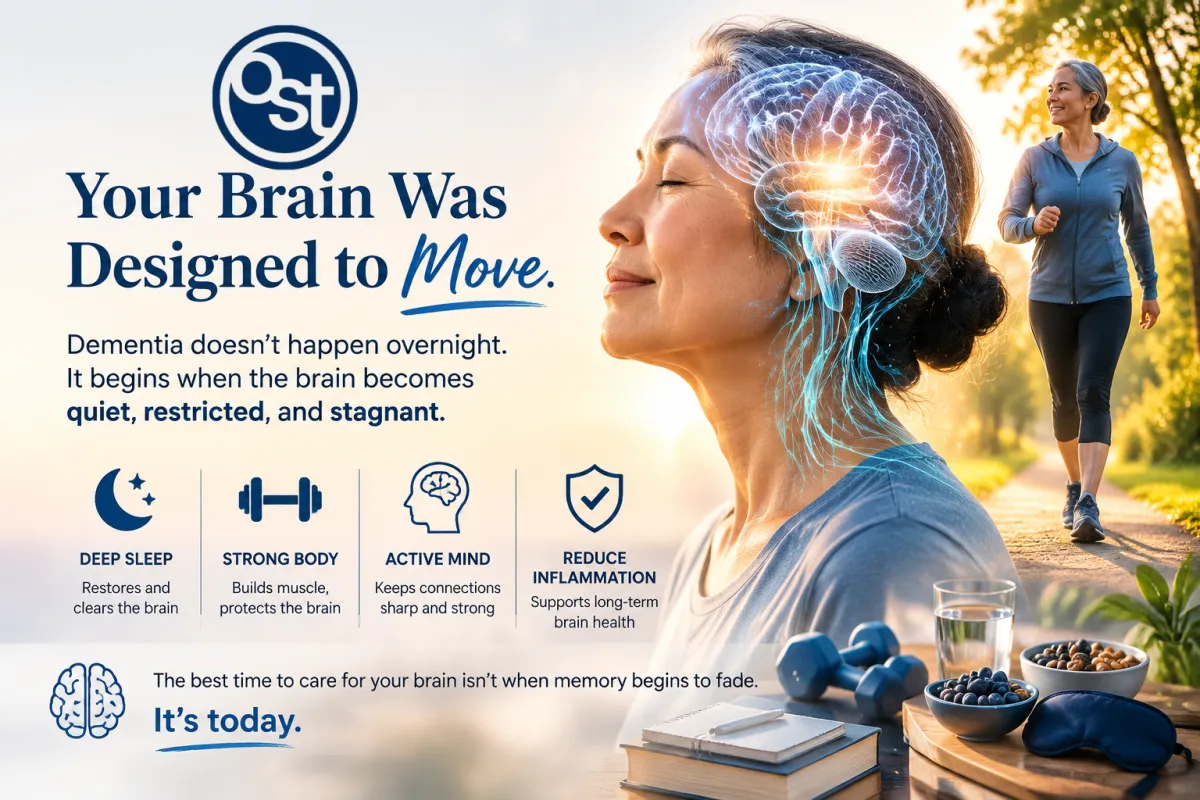
Long before memory begins to fail, before names are forgotten and before families notice something is wrong, I often feel a brain that has become quiet, restricted and stagnant.
Not in its thoughts.
In its movement.
The brain is designed to move.
With every heartbeat and every breath, cerebrospinal fluid washes through the brain, nourishing nerve cells, removing waste products and supporting the delicate tissues responsible for memory, emotion and attention.
When that movement becomes restricted, the brain loses one of its most important repair systems.
Science is beginning to catch up.
Researchers now recognise the importance of the brain’s waste-clearing network, the glymphatic system, which depends on healthy cerebrospinal fluid movement, particularly during deep sleep.
At the same time, we know lifestyle has a profound effect on brain health.
Strong legsare linked with larger brain volume and better cognitive performance.
Resistance trainingreleases myokines, chemical messengers that encourage the production of brain-derived neurotrophic factor (BDNF), helping grow and protect neurons.
Regular exercisereduces inflammation, improves circulation and appears to lower the risk of several cancers while protecting the brain.
Creatineis showing promise for supporting brain energy metabolism, particularly during ageing and sleep deprivation.
Vitamin D deficiencyhas repeatedly been associated with a higher risk of cognitive decline.
None of these interventions works in isolation.
They all support one thing:
A brain that can repair itself.
This is why I spend so much time assessing the head.
I want to know whether the tissues are moving freely.
Whether the cranial bones are communicating.
Whether the fluid dynamics feel healthy.
Whether the brain has the environment it needs to heal.
I don’t believe dementia is inevitable.
Many forms of cognitive decline develop over decades, not months.
The encouraging news is that the brain remains remarkably adaptable.
Improve sleep.
Build stronger muscles.
Challenge your brain.
Reduce inflammation.
Support healthy cerebrospinal fluid movement and lymphatic drainage.
Give the brain the conditions it was designed to thrive in.
The best time to care for your brain isn’t when memory begins to fade.
It’s today.
“Above all else, guard your heart, for everything you do flows from it.” -Proverbs 4:23
The Hebrew word translated as “heart” (lev) often refers to the centre of our thinking, understanding and decision-making. Protecting the source of our thoughts has always been a timeless principle.
Your brain is your greatest asset.
Protect it before it asks for help.