




















The Brain’s Alarm System: Why Worries, Memories, and Thoughts Keep Returning
The Brain’s Alarm System: Why Worries, Memories, and Thoughts Keep Returning
Details
Written by Michelle Davies
Published: 7 August 2026
Created: 7 August 2026
Last Updated: 7 August 2026
Do you find yourself overthinking?
Replaying conversations. Worrying about the future. Checking the same thing twice. Or perhaps you simply can’t stop thinking about someone.
Most of us have experienced it.
While obsessive-compulsive disorder (OCD) is a recognised medical condition that requires appropriate assessment and treatment, many people experience periods where their brain becomes “stuck on repeat.”
The question is… why?
Deep within the brain lie two remarkable structures: the amygdala and the hippocampus.
The amygdala acts like your brain’s smoke alarm. It constantly scans for anything that might threaten your safety. The hippocampus is your memory centre, helping the brain compare today’s experiences with yesterday’s.
Together they ask one simple question:
“Am I safe?”
If the answer is uncertain, the brain keeps searching.
The same thoughts return.
The same worries replay.
The same behaviours repeat.
It’s not because you’re weak. It's because your brain is trying to protect you.
Interestingly, research has shown that people in the early stages of falling in love can also experience intrusive, repetitive thoughts about one person. The brain’s reward circuits become highly active, creating an intense focus.
In many ways, our brains are designed to become temporarily preoccupied when something feels emotionally significant.
Protection and connection are two of the brain’s strongest drivers.
In my clinic, I also consider another piece of the puzzle.
The brain is an organ. Like every organ, it depends on healthy circulation, nourishment, and the free movement of its surrounding tissues. When I assess patients with persistent anxiety, brain fog, or repetitive thought patterns, I often find areas of restriction around the head, neck and upper spine.
Although we cannot say these restrictions cause obsessive thinking, restoring comfortable movement and helping the nervous system settle can be an important part of supporting overall brain health.
I often say:
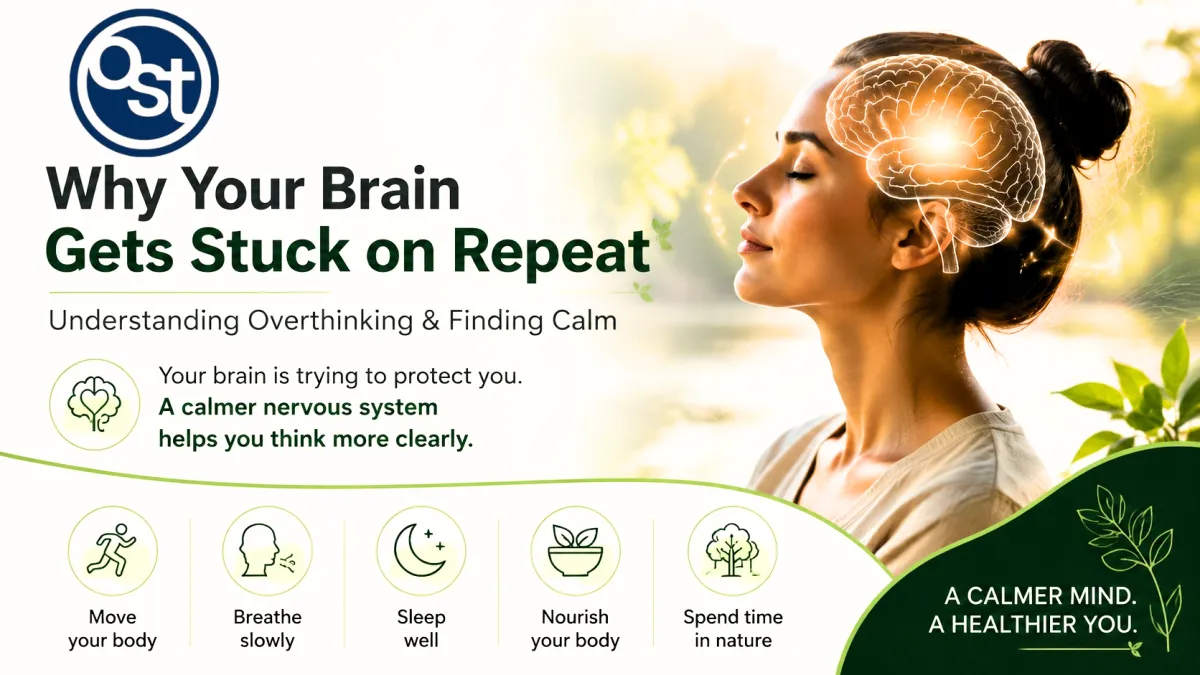
A calmer brain thinks more clearly.
We cannot always control the thoughts that enter our minds, but we can create an environment where the brain is less likely to stay trapped in survival mode.
Support your brain every day:
* Move your body.
* Breathe slowly through your nose.
* Hum for five minutes.
* Prioritise restorative sleep.
* Nourish yourself with whole foods.
* Spend time in nature.
* Seek help if obsessive thoughts become persistent or begin to interfere with your daily life.
Your brain is doing its best to protect you.
Sometimes it just needs reminding that the danger has passed.
When the alarm settles, clarity often returns.