The Survival Pattern Stored Deep in the Body
The Survival Pattern Stored Deep in the Body
Details
Written by: Michelle Davies
Published: 19 March 2026
Created: 19 March 2026
Last Updated: 19 March 2026
Ever met someone who says:
“I just can’t switch off.”
Their hips are tight.
Their lower back aches.
Their breathing is shallow.
Their body feels permanently braced.
Most people assume this is just stress.
Often it is something deeper.
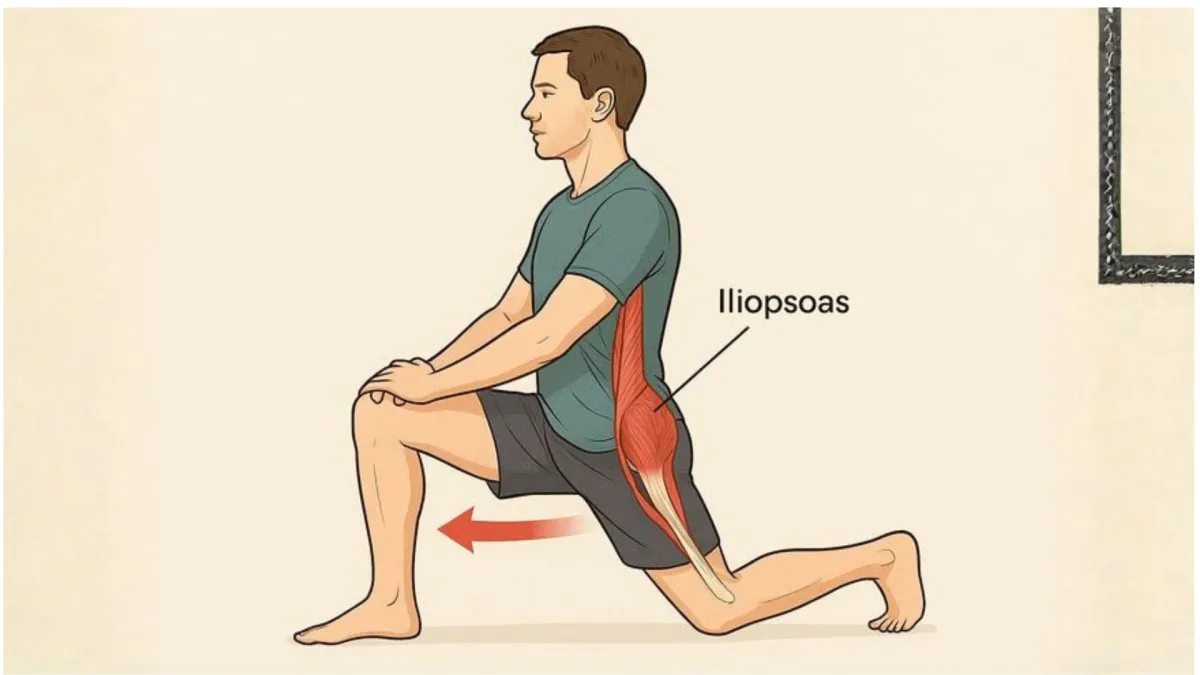
A powerful survival muscle called the psoas.
The Muscle That Helps You Run From Danger
The psoas is a deep muscle connecting your spine to your legs.
It sits right beside the diaphragm and nervous system.
When the brain senses danger, the body activates fight or flight.
Instantly the psoas contracts to:
* stabilise the spine
* pull the legs ready to run
* curl the body forward to protect vital organs
It is one of the body’s primary survival muscles.
When The Body Stays Stuck In Protection
If the body experiences prolonged stress, trauma, injury or emotional overwhelm, thepsoascan remain chronically contracted.
The brain may move on.
But the body stays in defence.
Over time this can create patterns such as:
* tight hips
* lower back discomfort
* stiffness in the spine
* shallow breathing
* digestive tension
* anxiety or restlessness
Because the psoas sits directly under the diaphragm, breathing becomes restricted too.
The cycle then looks like this:
Stress → shallow breathing → diaphragm tightens → psoas tightens → nervous system stays alert.
Why The Rib Cage Matters
The diaphragm sits inside the lower rib cage, and it works closely with the psoas.
When the rib cage becomes stiff, the diaphragm cannot move freely.
The psoas then tightens to stabilise the spine and the body stays in survival mode.
When the rib cage softens and breathing deepens, the nervous system receives the signal that the body is safe again.
Two Simple Exercises That Can Help
1. Constructive Rest Position
Lie on your back.
Bend your knees with your feet flat on the floor.
Let your lower back soften into the ground.
Place your hands on the lower ribs and breathe slowly into the ribs and belly.
Allow the ribs to expand sideways as you inhale.
Stay here for 10 minutes.
This simple position allows the psoas to stop working and encourages the fascia around the muscle to soften.
2. Gentle Psoas Fascial Release
Lie on your back with knees bent.
Place your fingers just inside the front hip bone on one side of the lower abdomen.
Gently sink your fingers into the soft tissue of the belly.
Do not push hard - allow the pressure to be slow and patient.
Then breathe slowly into the belly for 60–90 seconds.
You may feel warmth, softening or a sense of release through the hip or lower back.
Repeat on the other side.
This works because the psoas sits deep behind the abdominal organs, and its fascial layer responds well to gentle pressure combined with breathing.
How I Help Release This Pattern
In my work I often focus on releasing the psoas and rib cage together.
By restoring movement through the rib cage and diaphragm, the nervous system begins to shift out of fight-flight.
When this happens people often notice:
deeper breathing
reduced tension in the hips and spine
a calmer nervous system
a greater sense of grounding
The body finally receives the message it has been waiting for:
You are safe.
And the survival muscles can let go.