The Science of Emotional Control Most People Ignore
The Science of Emotional Control Most People Ignore
Details
Written by: Michelle Davies
Published: 07 May 2026
Created: 07 May 2026
Last Updated: 07 May 2026
You don’t lose control because you’re weak.
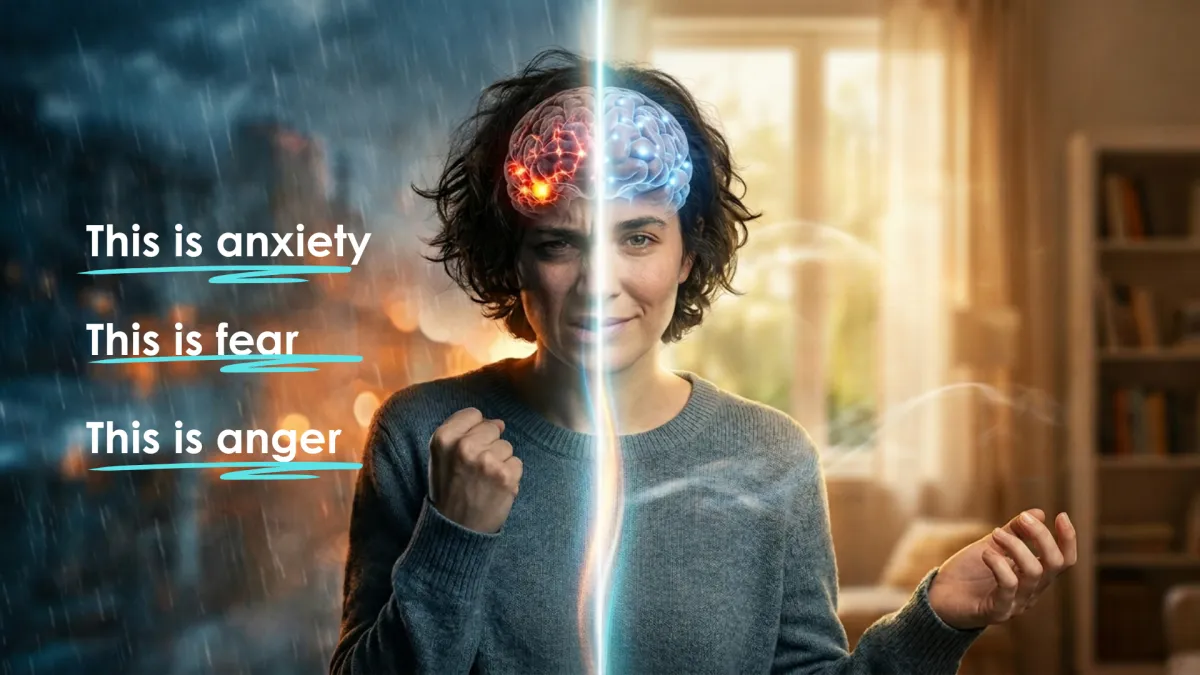
You lose control because your brain switches systems.
Something emotional hits…
Your amygdala fires fast.
No thinking. Just reaction.
That’s when you feel:
-anxiety
-overwhelm
-anger
-fear
And your prefrontal cortex - your clarity, your control - goes quiet.
So you:
react too quickly
say things you don’t mean
shut down… or push through
and never really process it
Not because you can’t.
Because the system changed.
Here’s the shift.
You don’t need willpower.
You don’t need to “calm down."
You need one thing:
Name it.
“This is anger.”
“This is anxiety.”
“This is fear.”
That’s it.
The moment you do:
your thinking comes back
your body softens
your breath slows
the intensity drops
You move from reaction… to response.
The feeling stays.
But it stops controlling you.
Go one level deeper.
Don’t say “stress”.
Say:
pressure
uncertainty
fear of judgement
lack of safety
The more precise the word,
the faster the brain resolves it.
What most people do instead?
Suppress it.
“I’m fine.”
“It doesn’t matter.”
But what isn’t acknowledged doesn’t resolve.
It loops.
And it lands in the body:
tight shoulders
jaw tension
headaches
digestive discomfort
The body holds what the mind avoids.
So here’s the practice.
When something rises:
Stop.
Don’t analyse.
Don’t fix.
Name it in 1–2 words.
Then add:
“I can feel this… and I’m safe.”
That’s how you switch your brain back on.
Not by force.
By precision.
From reactive… to regulated.
From contraction… back into flow.
- Michelle